The Hidden Cost of Tool Sprawl in Construction—and How CollabWorkx Connects People, Projects, and AI
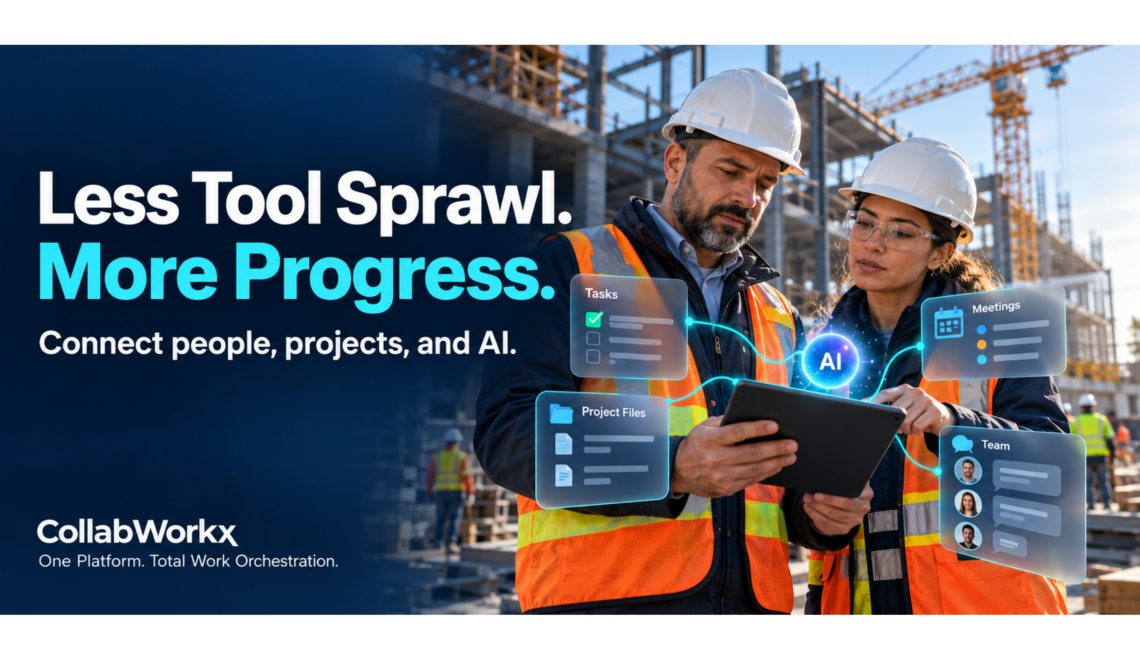
For general contractors, disconnected tools can create more than software expenses. They can slow coordination, scatter project information, and make it harder to keep work moving.Construction depends on coordination. Office teams, field crews, subcontractors, and clients need clear information about what is happening, who is responsible, and what comes next.
Yet the tools supporting that work are often disconnected. Conversations happen in one app, schedules live in another, documents sit in separate folders, and project updates arrive through email or text.
Each tool may serve a purpose. Together, they can create a fragmented workday.
CollabWorkx brings communication, projects, meetings, scheduling, files, and workflows into one secure workspace—with Worksphere AI helping people manage the work around them.
The Costs That Don’t Appear on a Software Invoice
Subscription fees are only part of the cost of tool sprawl. The less visible expense is the time people spend connecting information manually.
A project manager searches through messages for a decision. A superintendent calls the office to confirm a schedule change. A subcontractor receives a document without the conversation explaining it.
Repeated across projects, these small interruptions can contribute to delayed responses, duplicated effort, and avoidable confusion.
For general contractors, the question becomes: How much time does the team spend managing its tools instead of managing the work?
Connect the Office, the Field, and Project Partners
A unified workspace gives teams a shared place to communicate and coordinate.
With CollabWorkx, general contractors can organize project conversations in channels, assign and track tasks, share files, and bring participants together for meetings. External collaboration helps connect work with subcontractors and other project partners.
Consider a coordination meeting that results in a revised priority. The team needs to communicate the decision, update the next steps, and make supporting information available. Bringing those activities into one environment helps people follow through without repeatedly rebuilding the context.
Put AI to Work on Everyday Coordination
Worksphere AI extends that connected workspace with assistance focused on scheduling, projects, calendars, and audits.
For construction teams, these capabilities can support practical coordination needs:
- Scheduling Agent: Help identify suitable times for project reviews and coordination meetings based on available calendar information.
- Project Agent: Help organize priorities into clearer tasks and next steps.
- Calendar Agent: Help users review commitments and make room for upcoming work.
- Audit Agent: Help users understand recorded workspace activity and follow the history behind changes.
The value comes from helping people prepare and act with greater clarity. A project manager still sets priorities. A superintendent still brings field knowledge. The team still makes the decisions.
People lead. AI helps move the task forward.
Keep Information Connected to the Work
When messages, files, and tasks are scattered, understanding a decision can take longer than making it.
A connected workspace helps teams maintain the relationship between a conversation, the documents supporting it, and the actions that follow. That context matters when responsibilities change, new participants join, or someone needs to understand an earlier update.
CollabWorkx brings file sharing, document collaboration, version control, and workspace activity records into the broader collaboration environment. Teams can spend less effort piecing together information and more effort using it.
Make Privacy Part of Daily Collaboration
Construction projects involve information that requires thoughtful handling—from internal discussions to project documents and partner communications.
CollabWorkx places privacy and controlled access at the center of its workspace approach. Teams can organize collaboration around the people involved while managing access to shared information.
As AI becomes part of daily work, that same focus matters. Assistance should support the task at hand within an environment where people understand what they are sharing and remain in control of their decisions.
Evaluate the Full Cost of Coordination
For a general contractor reviewing its software stack, the most useful starting point is the team’s actual workflow.
Where do employees enter the same information twice? How often do they search across applications for an update? Which meetings require several rounds of messages to arrange? Where do handoffs lose context?
Those questions reveal costs that a subscription comparison alone can miss.
Specialized construction applications may still serve important needs. CollabWorkx provides a shared environment for the communication, coordination, and follow-through surrounding that work.
One Platform. Total Work Orchestration.
General contractors need their people, information, and next steps to stay connected.
CollabWorkx brings essential workplace tools together and adds practical AI assistance through Worksphere. The goal is straightforward: help teams reduce coordination overhead, maintain clearer context, and keep work moving.
Explore a unified workspace for people and AI at CollabWorkx.com.